The Hidden Value of Being Bored on a Business Trip

A hotel shoot got delayed by two days. The empty space it left changed how I saw Louisville, and more importantly, how I photographed the Hyatt Regency Louisville.
Louisville introduced itself before I took a single exposure for the job.
I arrived on Saturday 30 May. The Hyatt Regency Louisville shoot was meant to begin on Monday, but due to a big convention, the rooms weren’t available and I couldn’t start shooting until Wednesday. The actual shoot ran from 3 to 5 June 2026.
The unexpected delay became the story.
It gave me a free Sunday and two unscheduled weekdays in a city I had never properly seen. Blackbeard Espresso became one of the small landmarks of the delay.
Finding my way around an unfamiliar place is a skill I learned backpacking around Europe in my late teens. I learned to arrive somewhere I knew nothing about and discover it by walking first, working out where I was and asking questions later. However, on this occasion, walking Louisville without a shot list gave the city time to register before I photographed the hotel.
A turn toward the crowd

On Saturday evening, I set out toward the Big Four Bridge, aiming to cross the Ohio River and explore Jeffersonville. As I walked up the approach on the Louisville side, I spotted some interesting architecture in the distance and pulled out my phone to zoom in and take a shot. Looking closer, I noticed people there, then realised many more were heading that way. It turned out they were going to a football match.
I was looking at Lynn Family Stadium, where Louisville City FC were playing the Tampa Bay Rowdies. The Rowdies were probably the first American soccer team I’d heard of growing up in England, back in the days of the North American Soccer League.

I had no plans that evening and briefly debated whether to keep walking or go to the match. Then I turned around and headed for the football instead of crossing the bridge like I intended to do. I could walk the bridge another evening. On my way to the stadium, I pulled out my phone again and figured out how to buy a ticket. By the time I arrived, I had a seat.
Tampa Bay won two nil, but the result was almost beside the point. The best part of the whole thing was letting something unplanned replace the route I thought I was taking.
By the time I walked back, the evening had turned cooler.
That choice set the rhythm for the week. Notice something, follow it, and let the city interrupt the schedule.
A free Sunday

Sunday morning began with a walk down Fourth Street from the Hyatt Regency. By the time I reached Broadway, I was about to turn around and head back when a building caught my eye. It turned out to be the Brown Hotel.
I peered through a window and saw what looked like a lovely café or restaurant. I decided to return after I’d been back for a shower.
I’d stumbled upon one of Louisville’s jewels. The interiors felt like a window into another era of the city’s social life, and breakfast introduced me to the hotel’s signature dish, the Hot Brown.
Relaxing over breakfast in the gorgeous surroundings of the Brown Hotel gave me a few moments to look at what else I could do in the city over the next couple of days. The Muhammad Ali Center caught my attention, and I was excited to visit.
Before leaving, I had a little nosy through the Brown’s public spaces. The lobby, dining room and reception spaces had the sort of layered detail that rewards a slow look.
Later that day, I spent two to three hours at the Muhammad Ali Center. It was an unexpected pleasure.
Growing up in London, I’d heard about the night Ali fought Henry Cooper at Wembley. My own memories of him were mostly snippets: fights mentioned on the radio, interviews on television, his face appearing on the news.
As a kid, if I heard his voice on television, I’d run over to watch. He seemed like a naughty adult, saying things that shocked the grown-ups and made me laugh. I knew very little then about his political convictions, the stands he took or the racism he had faced. I simply thought he was a wonderfully funny character.
Walking through the exhibits, I realised how much his voice and those glimpses of him had been part of the soundtrack to my childhood. Photographs and stories brought back things I recognised from years ago, now with a fuller picture of the man behind them.


The bridge, later

Two or three days after arriving, I finally made it across the Big Four Bridge. Jeffersonville turned out to be quite pleasant, especially the view looking back across the river at the Louisville skyline.
By then, I was looking at somewhere I already knew. Had I crossed that first Saturday night, it would simply have been the skyline of a city I knew nothing about.
The job I came to do
When the work finally began on Wednesday, the city was no longer a stranger to me or something beyond a guest-room window. Three days of walking had given the view a scale, a rhythm and a set of associations. The assignment remained the same, but my relationship to the view out of the hotel windows had changed.
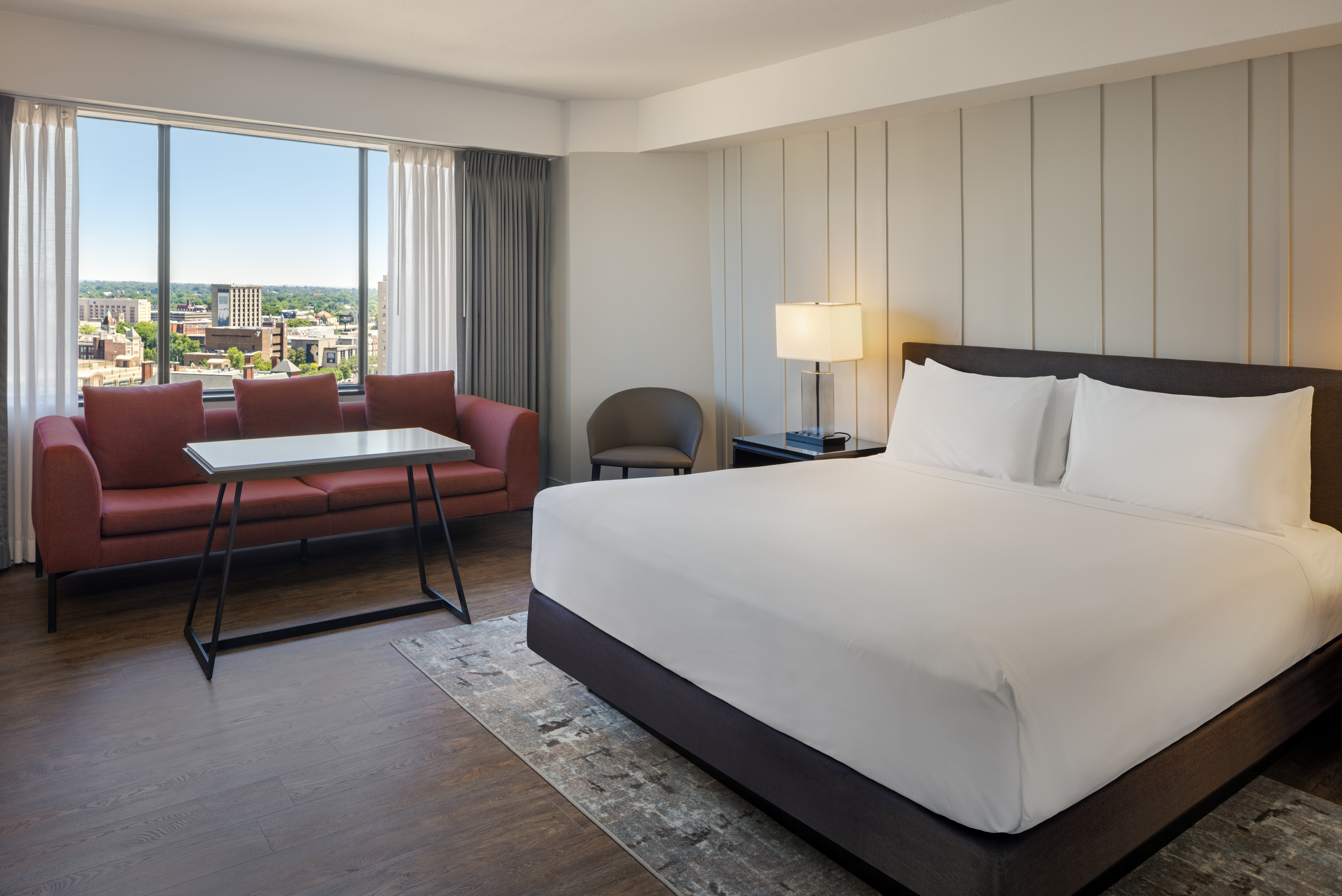
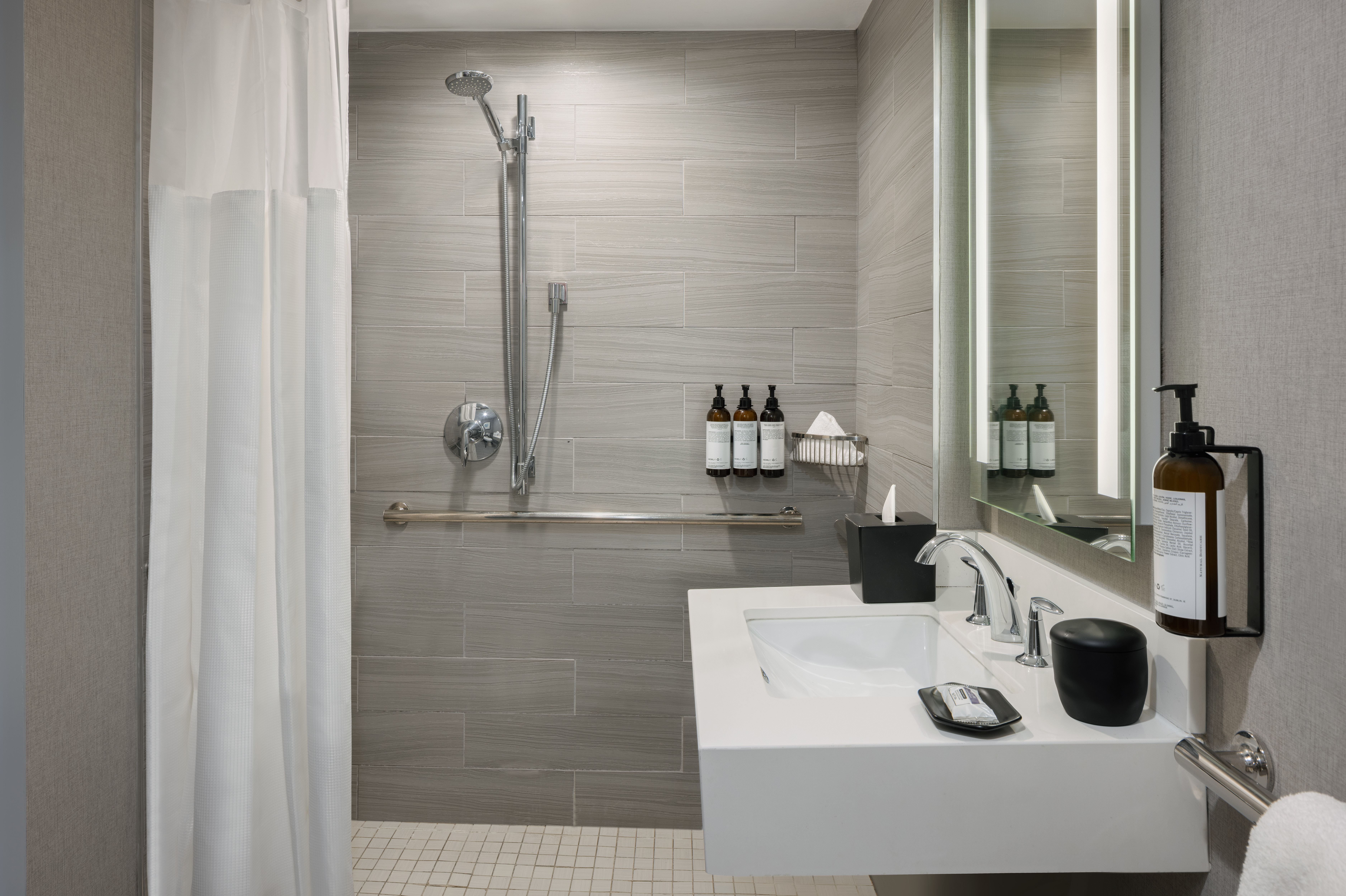
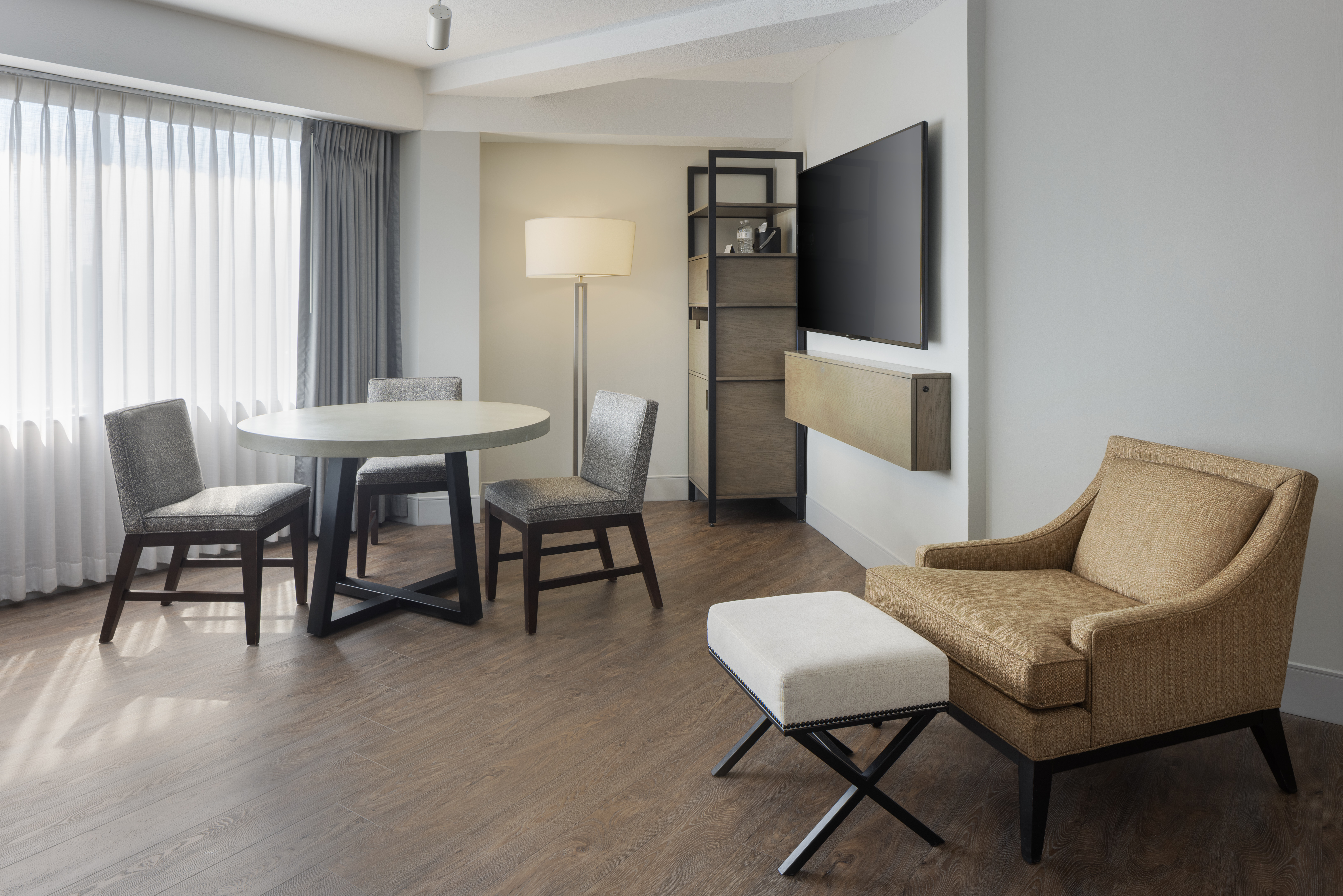
The view was not simply something outside the room anymore. It was something I had personally experienced.
The Brown Hotel, on its own terms
I had to visit the Brown Hotel for a second time, even though it had nothing to do with my assignment. My work takes me into hotels in different parts of the world. At this point in my life, I feel very much at home in them. They are part of my life.
The Brown’s historic public spaces were in stark contrast to those of the Hyatt Regency Louisville. That wasn’t a verdict on either hotel. One was the commission’s subject; the other was pure curiosity.


The river, the stadium, the Ali Center, the neighbourhoods and the two hotels had become parts of one walkable city rather than isolated stops. I wanted to see, on foot and at walking pace, what a river town in the middle of its own reinvention looked like up close. Not the version you get from a car window as you’re driving by on a highway.
What the delay gave back
The useful lesson was not that every business trip needs a list of attractions. It was that empty time can sharpen attention. A delayed shoot allowed the city around the hotel to become part of the photographic context.
I’ve moved around enough to know this is not unique to hotel work. I grew up in London, and in my life, I’ve spent time living in five countries on three continents. Each move taught me some version of the same lesson.
You do not get to know a place from the back of a taxi. Or the inside of a brief. You get to know it by spending unstructured time in it.