Blog
Why a Hotel Photography Pre-Shoot Call is Critical for Successful Hotel Photography
Introduction
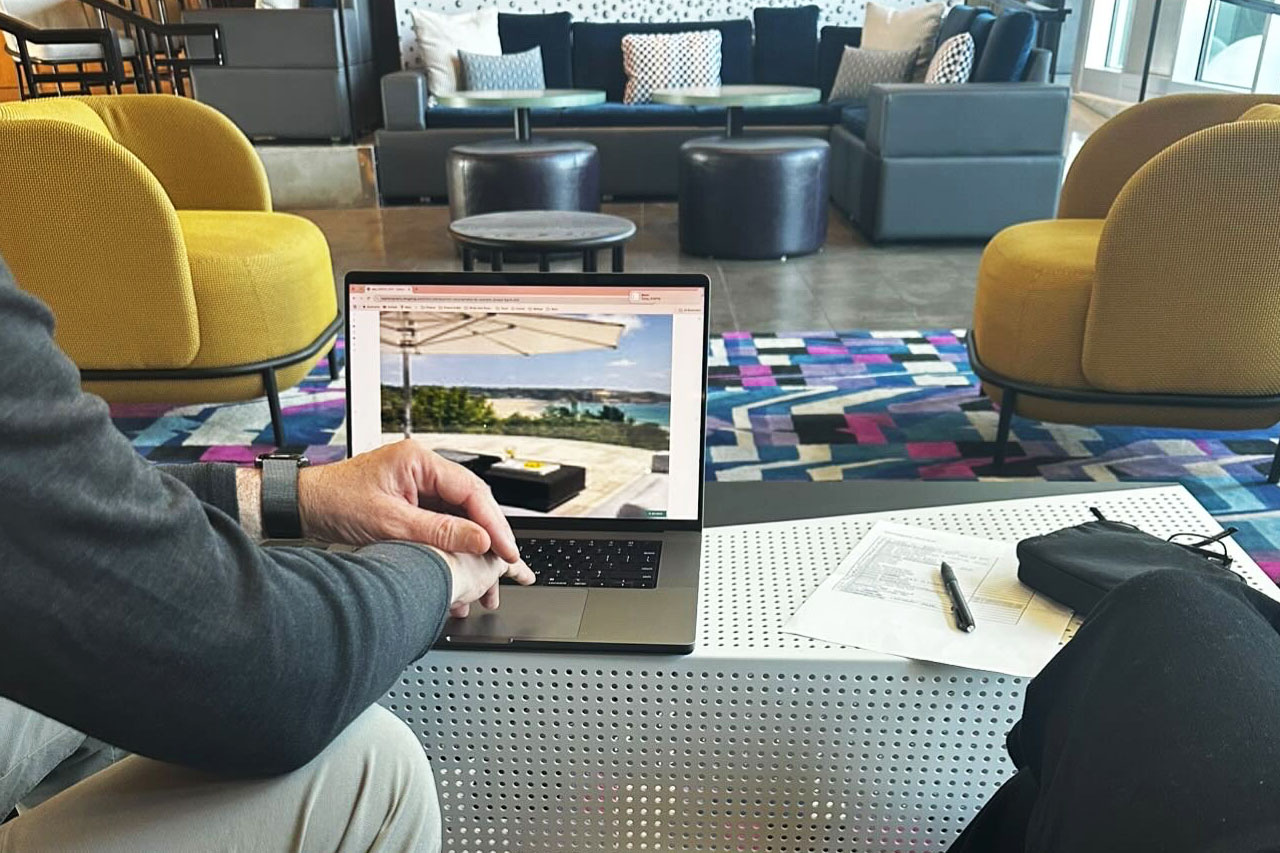
When it comes to hotel photography, most people focus on the shoot day itself, perfecting lighting, staging rooms, and capturing the right angles. But the truth is, the most important work often happens before the camera even comes out of its case. That’s where the pre-shoot call comes in. A critical step that can make or break the entire project.
A successful hotel photography pre-shoot call is a dedicated planning conversation between the photographer and the hotel’s key contacts—usually the GM, DOSM, or marketing lead. It’s the time to align on logistics, expectations, styling, and shoot goals. The difference between a chaotic shoot and a smooth, premium result often comes down to this call.
The call helps:
-
Identify problem areas early (like construction, noise, or clutter)
-
Ensure all key spaces will be shoot-ready on time
-
Set expectations for room staging, lighting, and access
-
Build trust and rapport so everyone’s rowing in the same direction
Room Preparation: Details Make the Difference
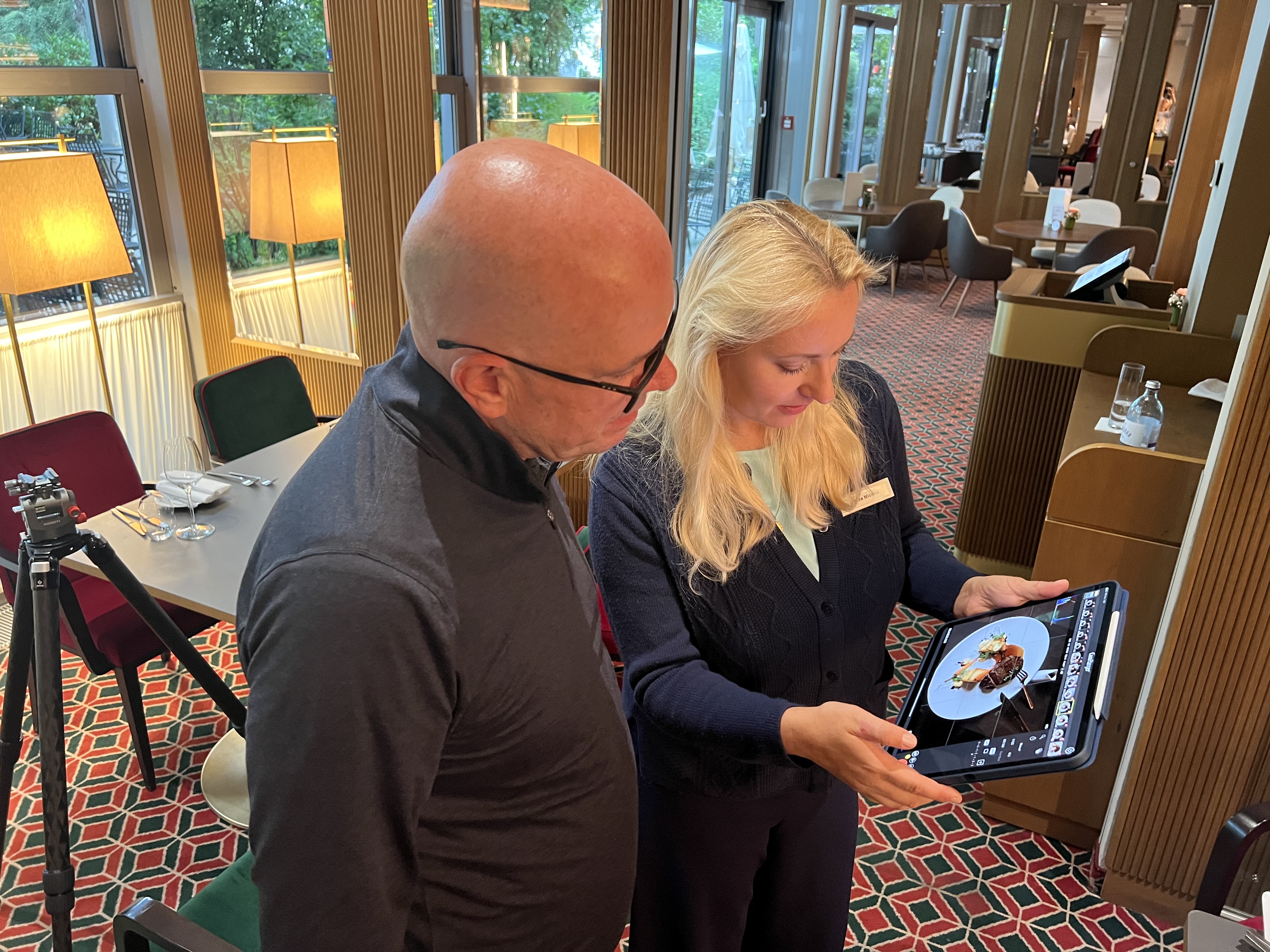
Rooms don’t magically photograph well—they’re styled to look effortless. The hotel photography pre-shoot call is where we agree on how many room types will be shot and how each one should be presented. We’ll talk about:
-
Ensuring the best, quietest rooms are allocated
-
Crisp bedding (steamed or freshly made) or preferably both.
-
Consistency in pillows, lamps, and curtain symmetry
-
Removing in-room clutter like TV remotes, paperwork, or minibar tags
A styled room feels intentional. A rushed one feels sloppy—and it shows in the photos.
Lighting Considerations: Natural vs. Artificial
One of the biggest photography killers? Bad lighting. During the pre-shoot call, we’ll check:
-
The position of the sun relative to your building (to time hero shots)
-
What time of day different room types get the best light
-
Whether lights can be dimmed or switched off for better balance
-
If blackout curtains or sheers are controllable
We work with natural light whenever possible.
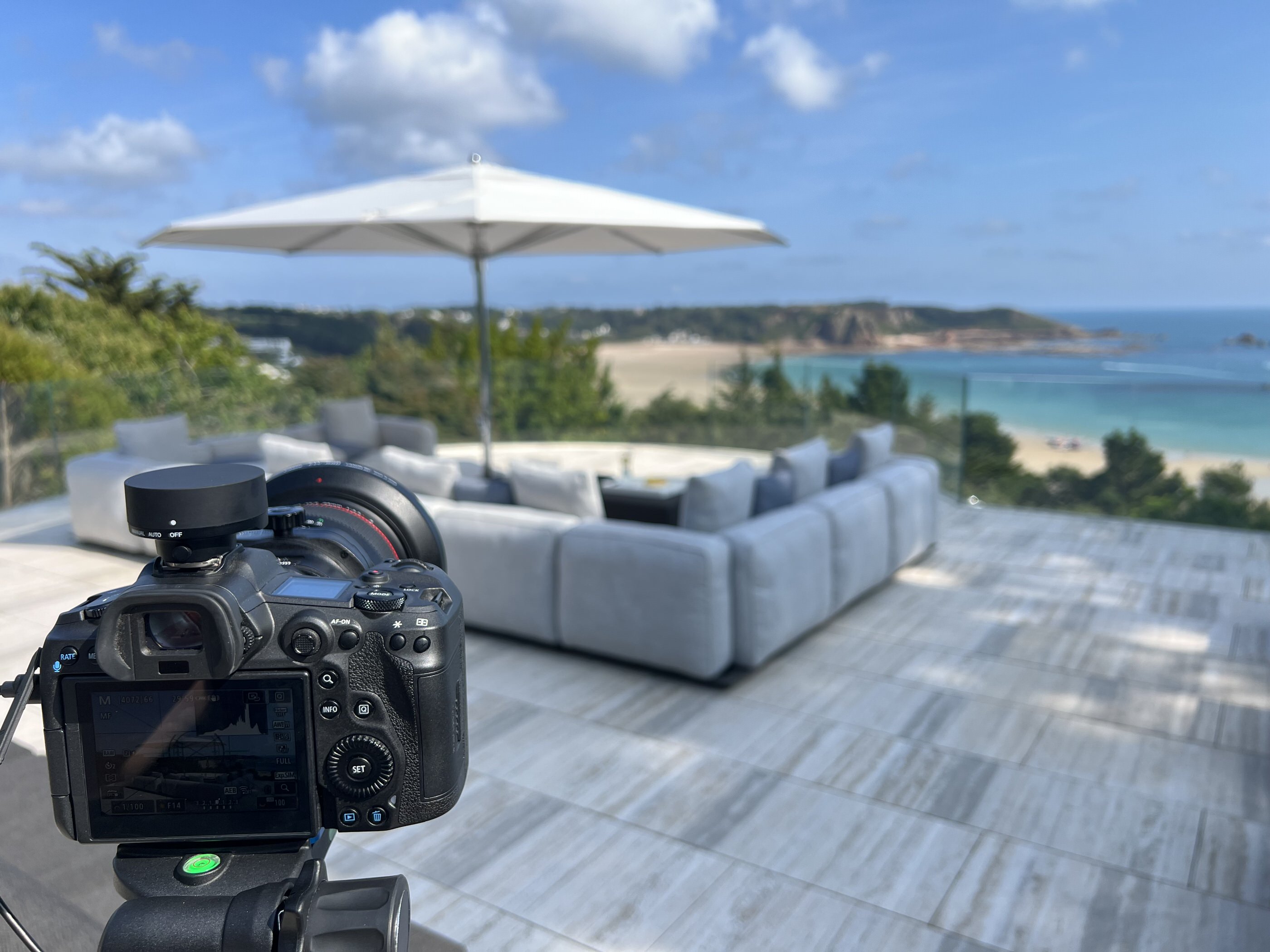
It looks real and luxurious. But if artificial lighting is needed, we’ll plan for that too. The brand guidelines also mention this for a couple of the brands, particularly Marriott.
For a premium add-on for Premium brands and above, I recommend using Visual Alchemy Solutions along with our services. For larger high-end hotels, this brings an extra level of assurance to the whole shoot.
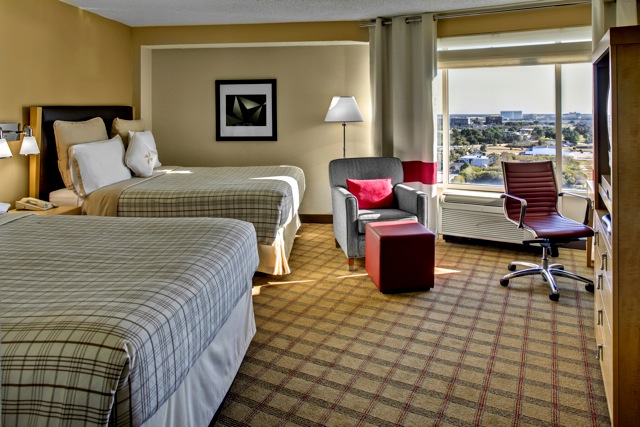
The photo below is an old one, but a perfect example of a room at the wrong time of day, with harsh shards of light hitting the floor and bed. For this situation it’s just a question of shooting rooms on this side of the building at a different time of day when the sunlight is coming from a different angle
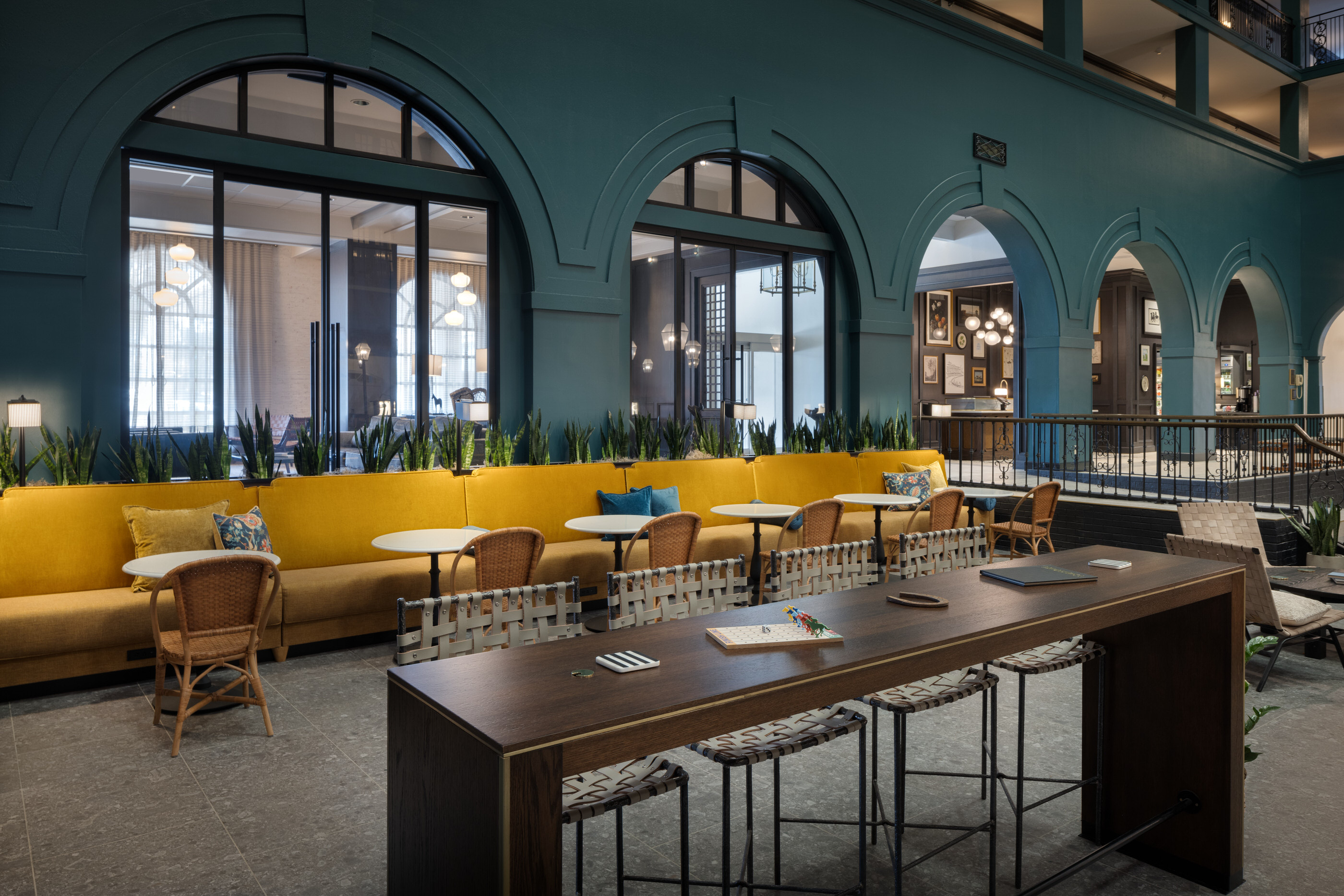
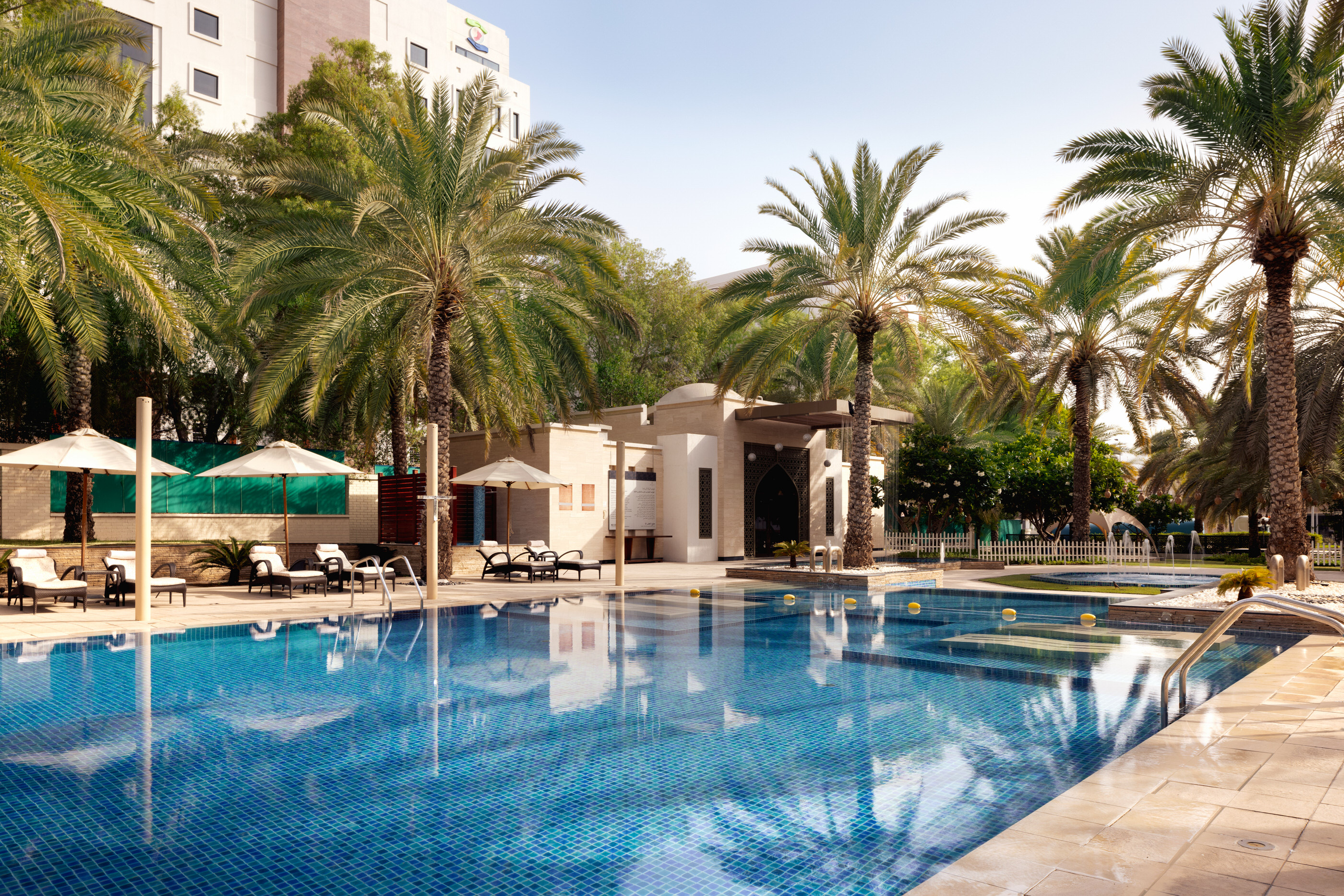
Busy hotels don’t stop operating just because it’s photo day. That’s why we plan in advance to block off key areas temporarily for clean, distraction-free shots. This includes:
-
Lobby areas (ideally in early morning or low-traffic times)
-
Pool areas (closed to guests during shoot windows)
-
Lounges, bars, or breakfast areas between service periods
This coordination avoids awkward surprises—like a family eating breakfast in the hero shot of your breakfast room.
Nothing ruins a hero exterior shot like a cluttered, guest-filled car park. During the hotel photography pre-shoot call we’ll talk about:
-
Blocking off key parking spots with cones or caution tape
-
Encouraging staff not to park directly in front of the building
-
Timing the shot around check-in/check-out lulls
-
Moving branded vehicles (delivery vans, shuttles) temporarily
The goal is a clean, welcoming front shot that says premium—not Tuesday afternoon traffic jam.


Access makes or breaks momentum. On the hotel photography pre-shoot call, we’ll confirm:
-
A point person who can unlock rooms and spaces as needed
-
Engineering contacts if we need lights adjusted or fans off
-
Housekeeping support for quick touch-ups or resets
-
Restaurant or F&B staff if any food service areas are being captured
When the right people are in the loop, the shoot flows. When they’re not—it stalls.
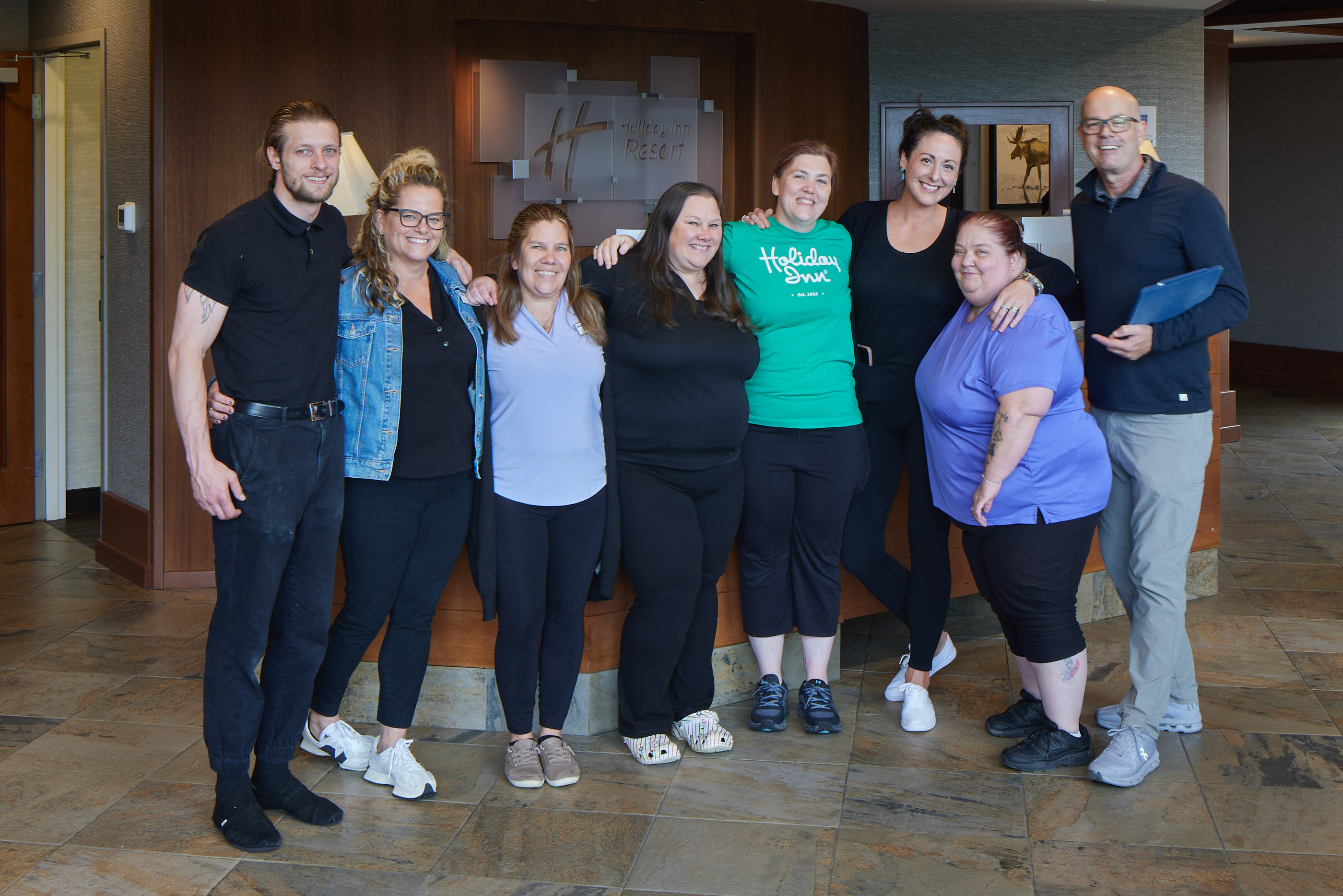
Above: Photo of a great team at the Holiday Inn Lake George, NY. Key people from every department who all played their part in the shoot. BTW we did a hotel photography pre-shoot call with them.
Some hotels treat a shoot like any other day—until it’s too late. Here are common (and avoidable) mistakes we aim to prevent with the pre-shoot call:
-
Cluttered spaces that should have been cleared
-
Empty breakfast buffets or uncleared plates in food shots
-
Unmade beds or visible housekeeping carts in hallways
-
Poor timing (e.g. shooting the pool at noon with harsh light and guests everywhere)
This call is our insurance policy against all of that.
To wrap the call, we usually build a short prep checklist tailored to your property. It covers:
-
Room assignments and shoot order
-
Key staff contacts and access plans
-
Blocked-off time slots for high-traffic areas
-
Linen steaming, curtain checks, and small styling details
We’ll share this in writing so everyone’s aligned.
Great hotel photography doesn’t just “happen.” It’s planned with precision, and the pre-shoot call is where that precision starts. It’s how we make sure your property shines in the best possible light—literally and figuratively.
If you’re investing in professional images, invest the time to make this call count. It’s the 30-minute chat that transforms “decent photos” into brand-level results. See our Hotel Photography Services to get started.