The Keeper of the Imperial: Photographing a Living History
At Vienna’s Hotel Imperial, a photographic assignment becomes a personal encounter with a history far older than the photographer holding the camera.
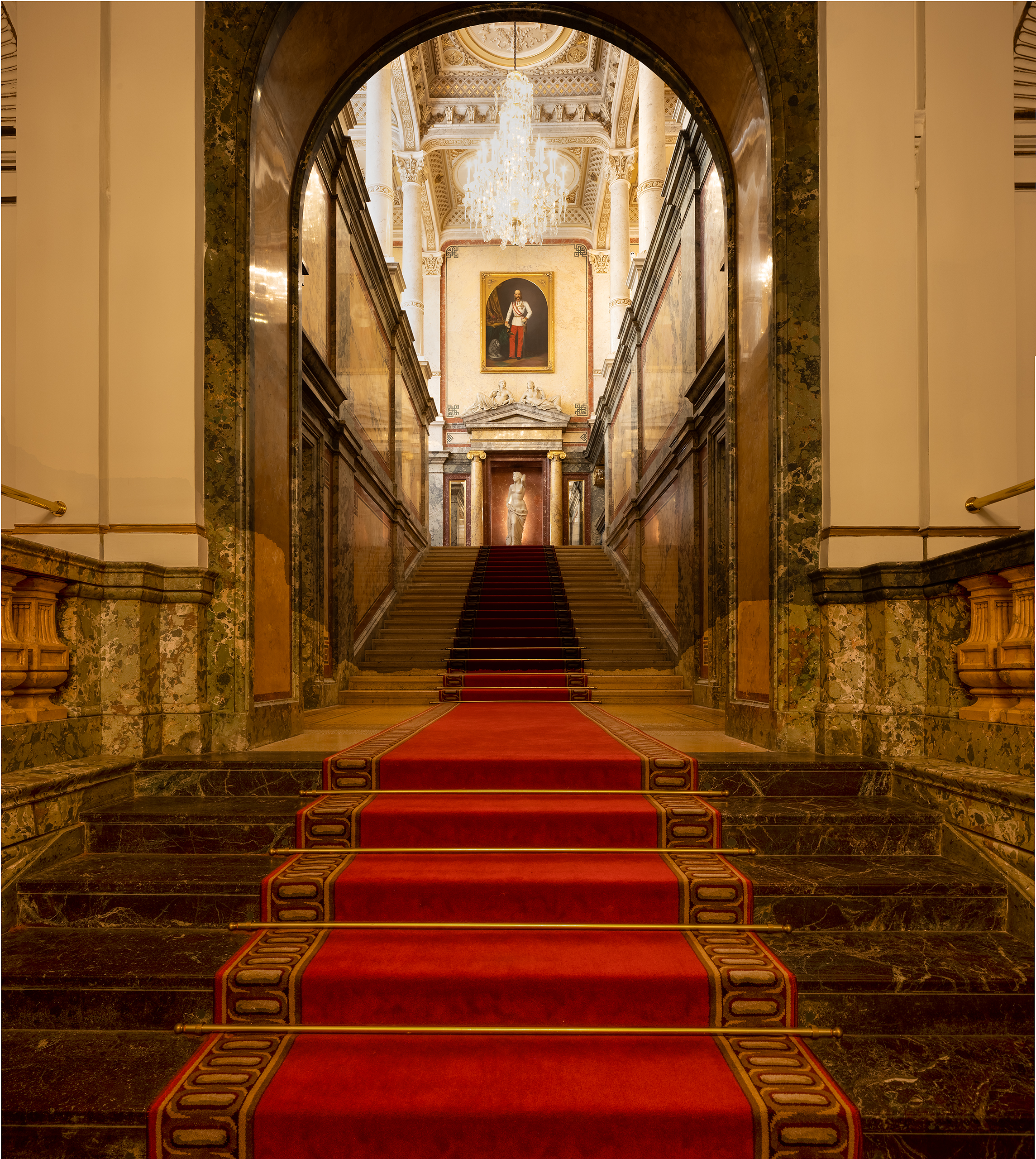
We had come from Salzburg to look at rooms. Then Suzanne and I turned the corner towards the Imperial’s main staircase, and the visit became something else.
Until then, the arrival had followed a familiar sequence: the grand exterior, the uniformed doorman, the reception area of a luxury hotel. At the staircase, I had the distinct feeling of encountering a living part of history. I was excited about photographing the hotel, and a little intimidated. The commission felt like a privilege.
This was our scouting visit, on 2nd April. Three months later, after the final day of the shoot, we would spend an afternoon with Michael Moser, the Imperial’s archivist. His connection to the building reaches well beyond the documents in his care. Before becoming its archivist, he spent 31 years as chief concierge, looking after the people whose visits would become part of the hotel’s story.
The staircase was the introduction. Herr Moser would later offer a way of looking beyond it.
A palace learns to receive the world
On Vienna’s Ringstrasse, a former private home became a place for people passing through. The Imperial was built as the palace of Duke Philipp of Württemberg, then converted into a hotel for the World Exhibition of 1873. For more than 150 years, the Imperial has welcomed heads of state, world leaders and celebrated artists, among them Queen Elizabeth II, Otto von Bismarck and Charlie Chaplin. Knowing who has passed through these rooms adds another dimension to photographing them.
Consider the Imperial Bar. According to the hotel’s history, the space began as an open courtyard. It became a restaurant for the exhibition, later served as the lobby, and took on its present role as a bar in 2014. A visitor sitting there today occupies a place that has repeatedly been given a new purpose.
That succession of uses makes a historic hotel an intriguing subject for a photographer. A room may carry the proportions and decoration of another age while being arranged for a meeting, a dinner or a wedding now. The photographs have to make sense of both.
Looking closely
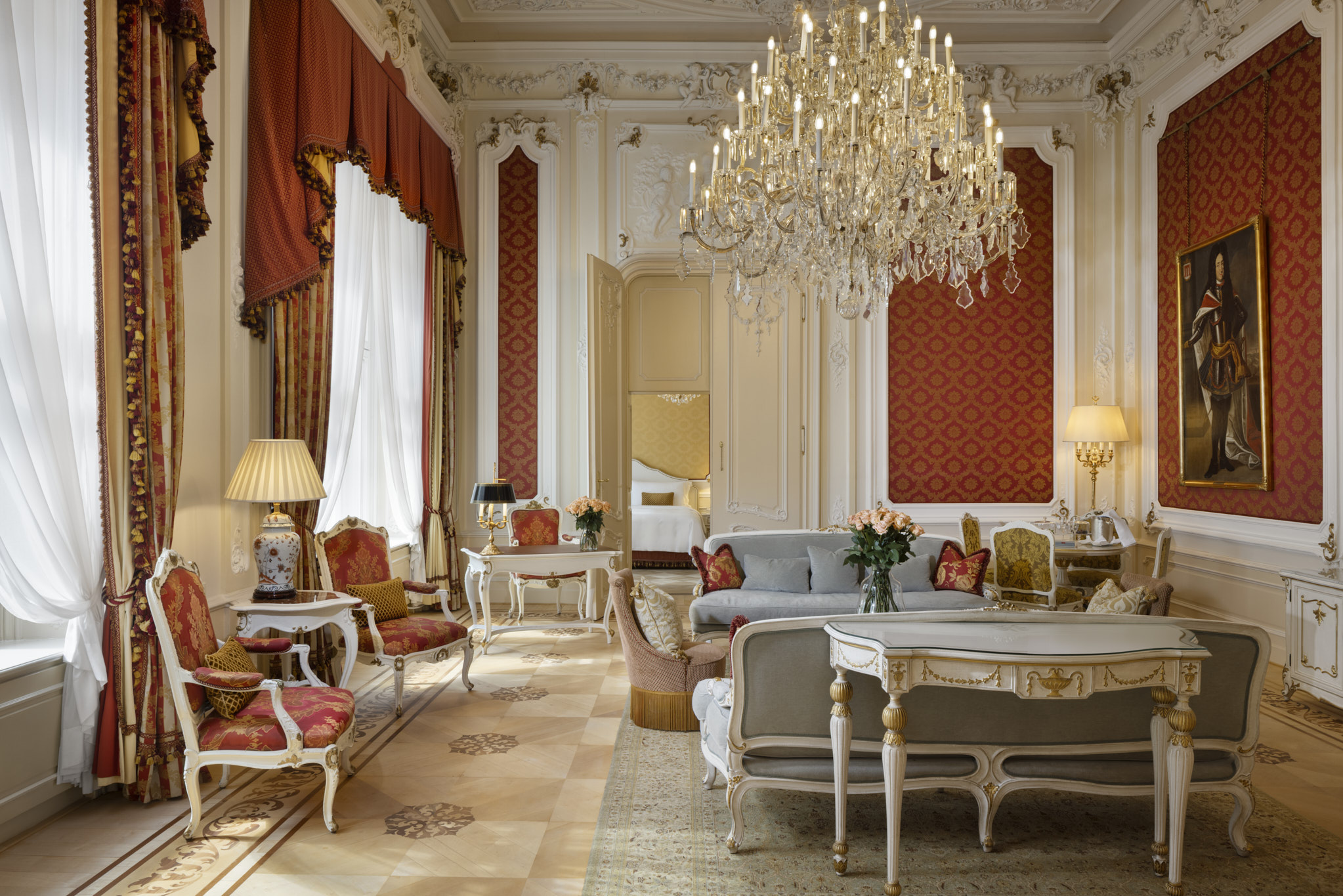
During our April scouting visit, Daniela and Martina showed us the meeting spaces, the Marble Hall and the suites. As soon as we walked into the first suite, I knew how I wanted it to look and feel in the photographs.
I wrote to them the following morning. I had been awake thinking about the shoot and the grandeur of the rooms we had seen. I suggested allowing an extra half hour for each room so we would have time to get the details right.
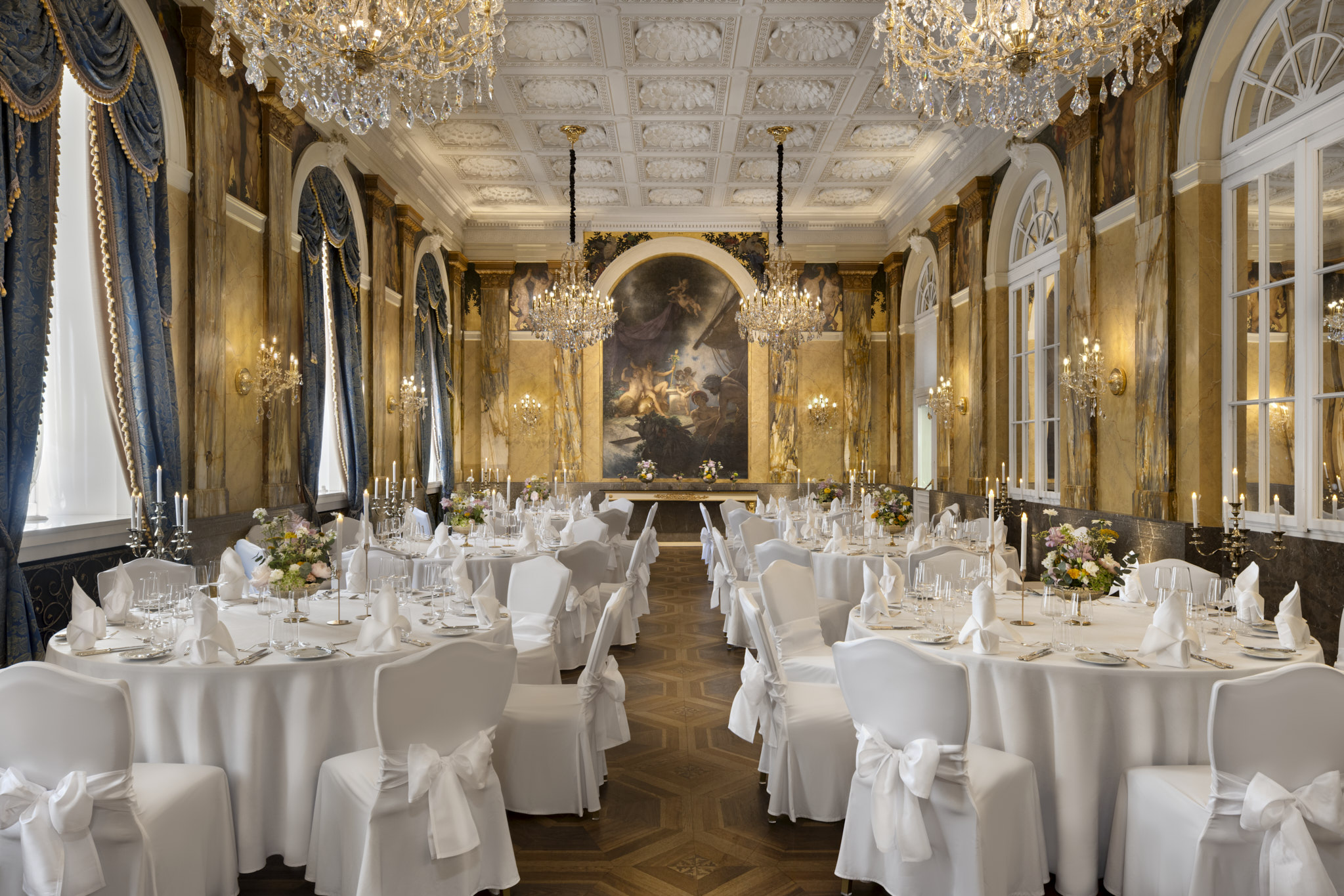
We returned at the end of June and photographed the hotel from 1st–3rd July. We started in the Marble Hall, set up for private dining or a wedding. The hotel team had done a wonderful job preparing it. There were just a few things to adjust for the camera.
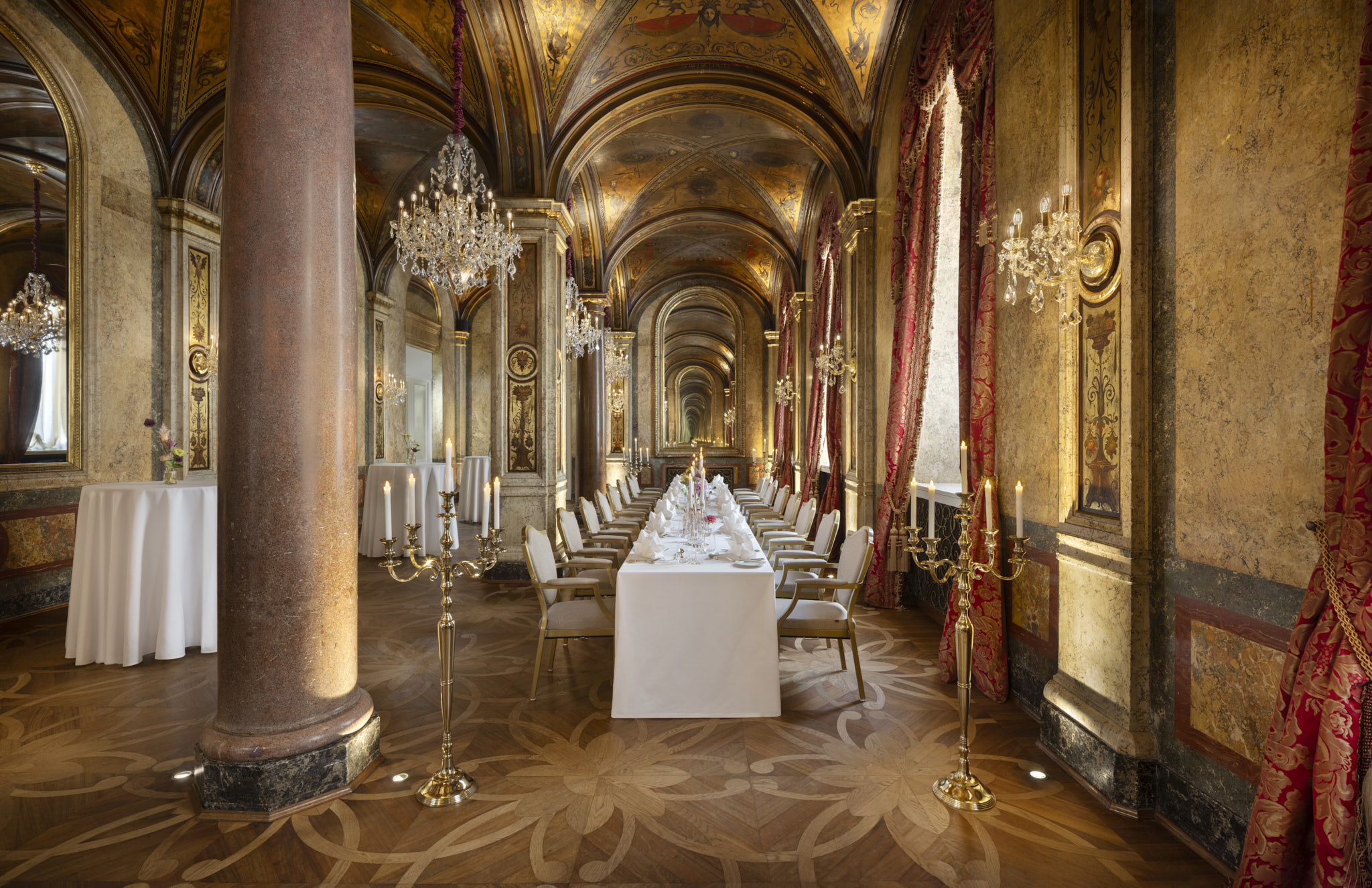
One room needed particular care with the lighting. It had dark timber walls and a dark timber ceiling, with a light, delicate setting on the long dining table. I wanted to keep the detail in the table setting without losing the warmth and detail of the wood.
I took a series of bracketed exposures, then added light to the wood in separate frames. My editor and I blended these together carefully. The lighting needed to look natural, with detail in both the darker wood and the lighter table setting.
In another meeting room, we worked with the team to refold the tablecloths into a more modern blocked fold. These are the sorts of adjustments that take time on a shoot. They may seem small, but they make a difference to the finished photograph.
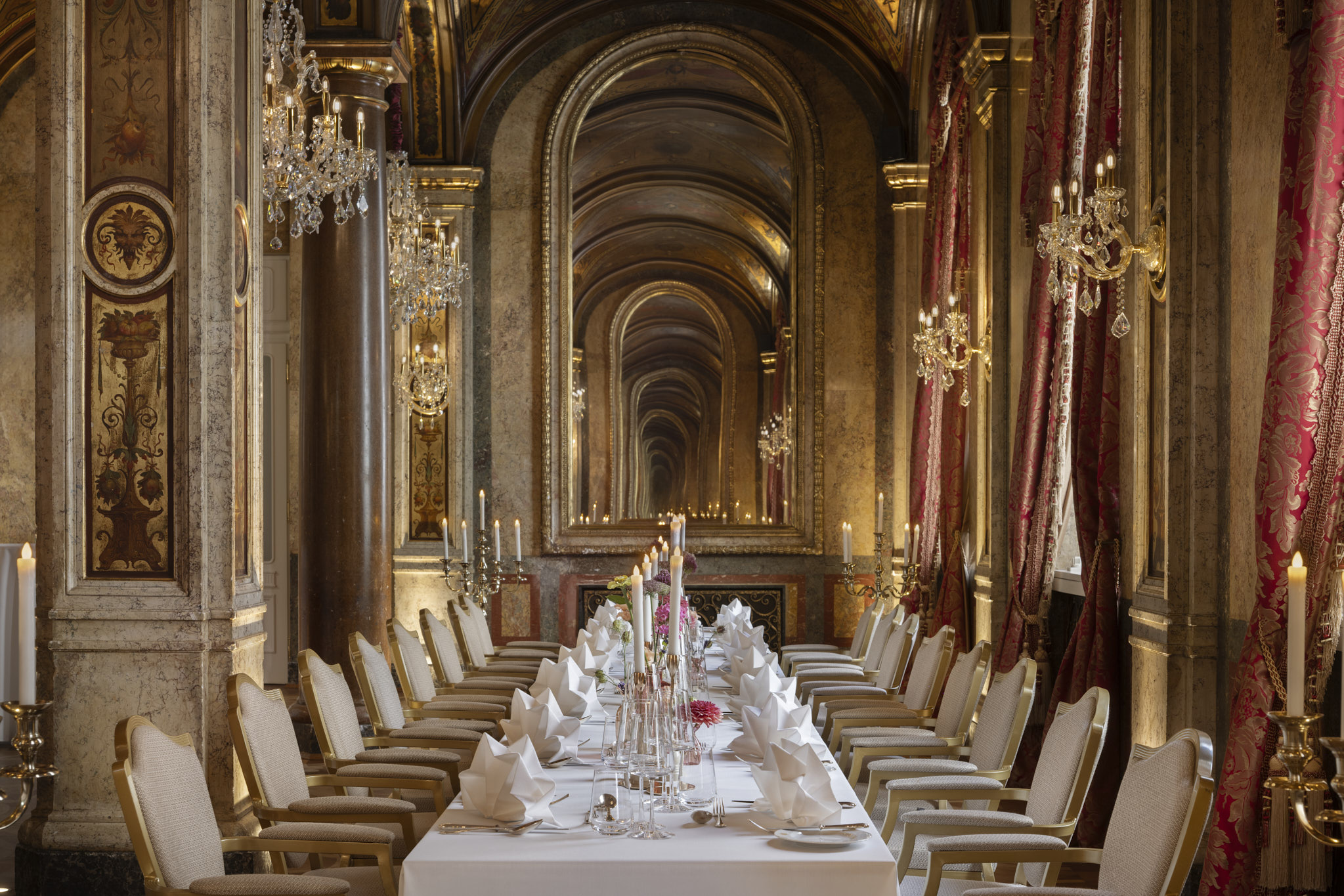
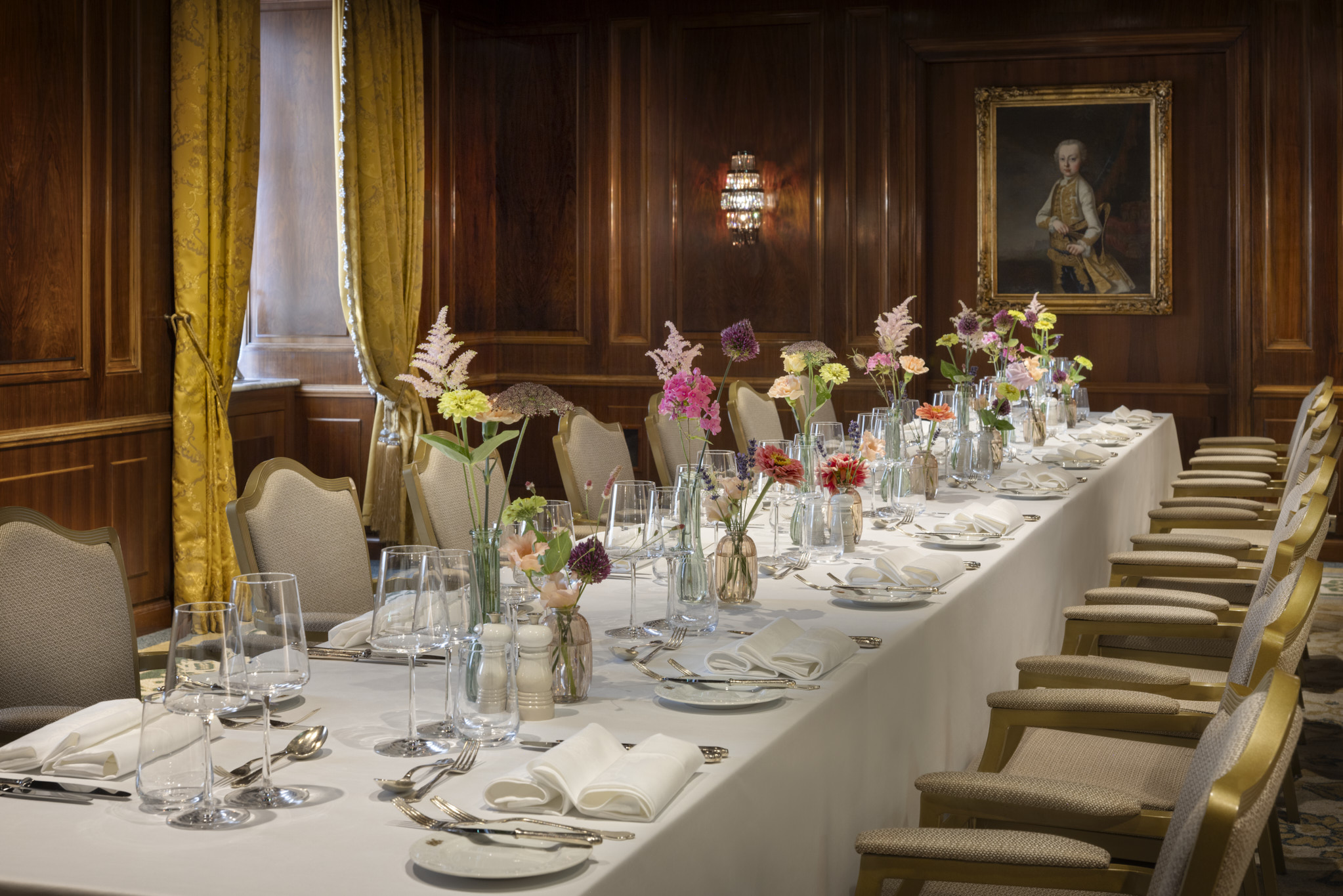


Working with the hotel team was an important part of getting the images right. Their preparation and help with those final adjustments made a real difference.
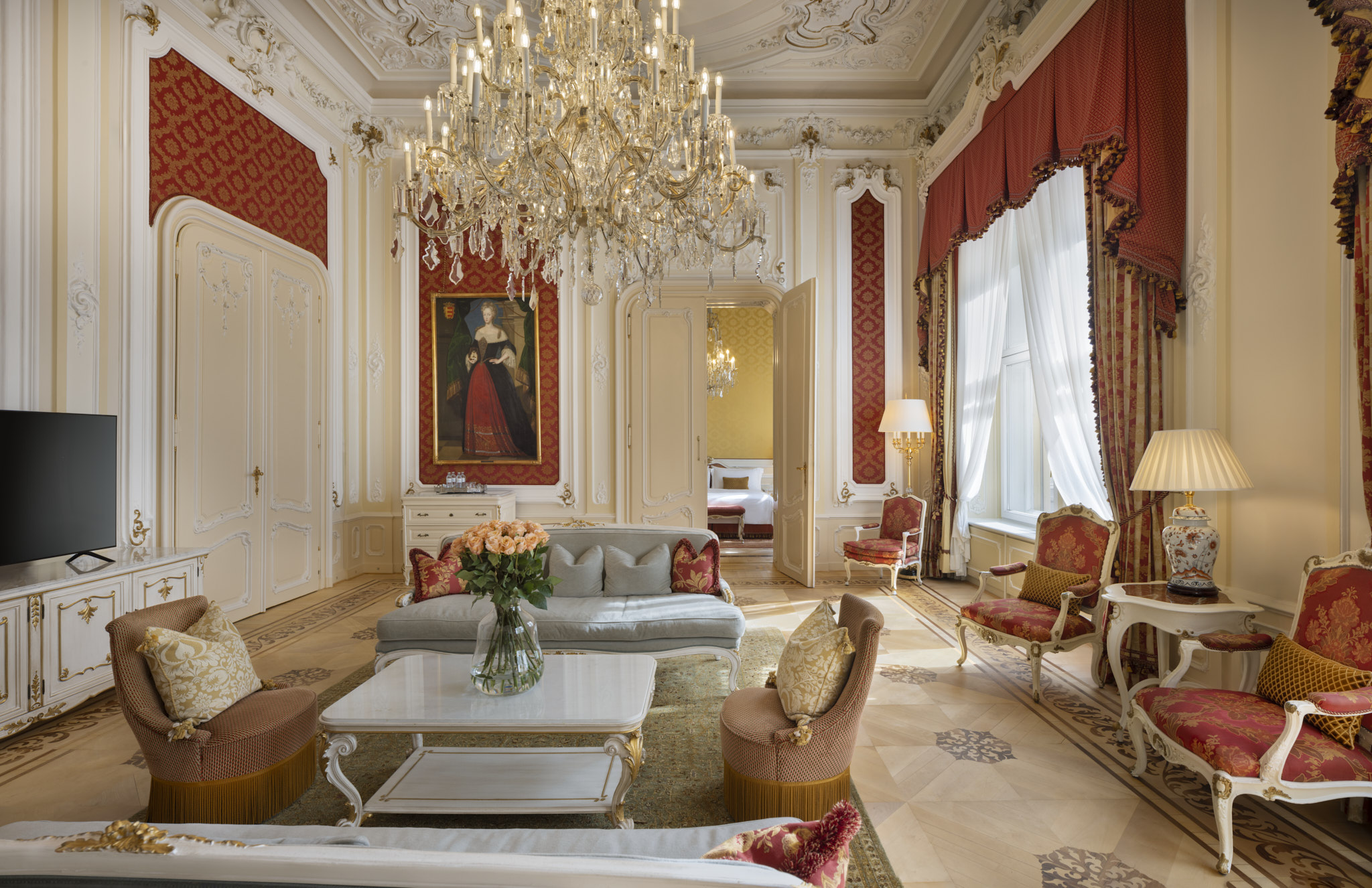

Between the photographs
After work, Suzanne and I went for a stroll through the streets to get some exercise. Since living in Austria, we have gradually become more familiar with Vienna on our visits. Walking together was part of the pleasure of being there.
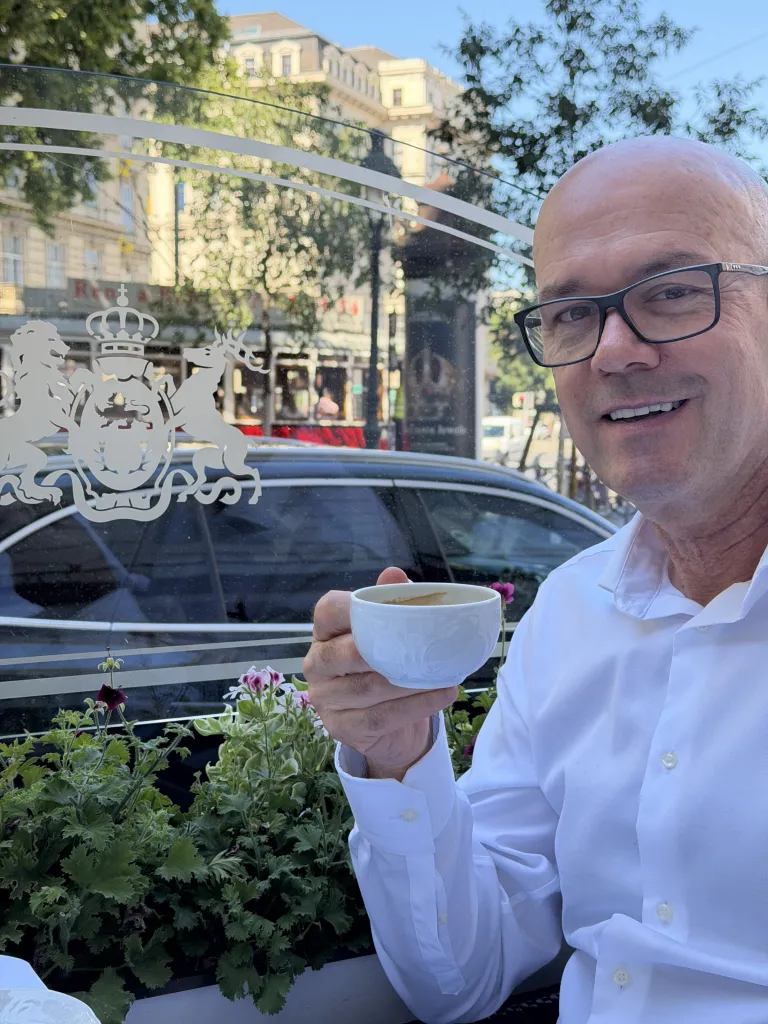
What I grew fond of was the distinctly Viennese hospitality of Café Imperial Wien. There was something special about enjoying a place that generations of guests had experienced before me. I remember breakfast one morning on the terrace, relaxing over a coffee and being part of a city that was waking up.
Whether I’m having an early morning coffee in Chicago, Sioux Falls, Bridgetown, Paris, London, Muscat or Vienna, that sense of place always comforts me, wherever in the world I am. It inspires me to keep going and photograph more wonderful hotels.
The man who keeps the memories
Our private tour with Herr Moser took place on 3rd July, after the final day of the assignment. Here was someone who had spent a working lifetime welcoming guests, and had continued his relationship with the Imperial after retirement by caring for its history.
The Vienna Tourist Board’s interview with Michael Moser describes the guest books he now looks after. The pages belong to the quieter history of a hotel: a visit ends, a guest leaves, and a record remains.
Among the pages Herr Moser showed me was one from the Vienna summit of 4th June 1961, bearing the names of John F. Kennedy and Nikita Khrushchev. Herr Moser pointed out Kennedy’s signature among the entries.

Some of the things preserved are more unexpected. A 2018 profile for Austrian broadcaster ORF describes him documenting photographs and showing porcelain specially made for a visit by the Queen. A royal visit leaves something beyond a famous name: an object made for the occasion, kept after its immediate purpose has passed.
The archive itself was a treasure trove. Alongside the documents were objects that belonged to the working life of the hotel: cutlery in its presentation case, uniform hats and shelves filled with records. They made the Imperial’s history physical rather than abstract.


ORF also draws attention to the discretion that carried over from his years as a concierge. An archivist with that background occupies an unusual position. He knows that the record of a hotel is also a record of people who were once its guests, entitled to privacy even when they were famous.
The tour gave a human centre to a subject that could easily be overwhelmed by grandeur. The Imperial’s past has someone looking after it.


A special thank-you to Michael Moser for sharing his time, knowledge and the treasures in his care with us. He is himself a Vienna treasure.
My thanks to Daniela, Martina, Julia and the wider Imperial team for making the shoot such a pleasure. A special thank-you to the hotel’s General Manager, Thomas van Opstal, and to Alex Bawden at Marriott for his continued support and encouragement with this project.
My first encounter with the staircase had made me conscious of the people who had passed through before us. By the end of the visit, there were also faces to attach to the Imperial of today: Michael Moser caring for its records, and the team working beside us to prepare its rooms.
Photographing a place like this carries a particular weight. My images record a few days in a much longer life. The hotel started living its story long before I started living mine, but now my story is intertwined with it.